Changing for the better, one bite and (deep) breath at a time.

Wednesday, October 24, 2012

Food Diary of a Pregnant Dietitian

A lot of people have asked me if my eating habits have changed since becoming pregnant.  In general, I'd say they're relatively the same, but I'm certainly hungrier for more food than I used to be!

The whole "eating for two" statement is really a fallacy.  Starting in the second trimester and in addition to greater vitamin/mineral requirements, pregnant women need only 300 extra calories per day to support a growing fetus.  That equates to half a sandwich, an apple with 2 T peanut butter, or a large cookie.  Some of these extra calories should contain protein, since protein needs are also increased.

Does this mean I count out 300 calories and make sure to scarf them down?  Nope.  I don't count calories at all, just like before I was pregnant.  I just listen to my body and monitor my weight gain with my doc to make sure I'm getting enough.  My activity levels have decreased a bit since pre-pregnancy and some days the baby seems to be growing more rapidly than others, so it's really hard - and not necessary - to focus on numbers while eating.  I am aware of my hunger and fullness and make sure to have plenty of snacks nearby for when hunger strikes.  Some days I'm ravenous, while other days it seems like there's just not quite enough room in my abdomen to fit much food (which may be true).

By the way, recommended pregnancy weight gain ranges from 25-35 lb.  I will likely gain around 30ish pounds if I gain at the same rate I'm going, but I absolutely don't obsess about it.  Pre-pregnancy I rarely weighed myself, but now I hop on once a week to make sure I'm gaining enough and to check that I haven't gained a really big amount - such as 5 pounds in a week - because that can indicate that the body is retaining too much fluid and preeclampsia may be setting in.

Generally, physicians want pregnant women want to gain 2-5 pounds in the first trimester and about a pound a week thereafter. That doesn't mean that every person will follow this pattern.  I gained 6 pounds in the first trimester and then stayed there for about 4 weeks despite having an increased appetite.  After that, my weight gain pretty much increased by 0.5 - 1.5 lb per week.

What if you gain more in pregnancy?  While there are some potential risks to you and your baby if you gain a significant amount of weight, what I usually advise clients to do is listen to their bodies and not just eat "because they can."  In fact, if you have an intuitive eating mindset, you always "can" eat anything; pregnancy is no different.  Nutrition is perhaps the most critical during this imperative developmental stage, so focusing on nutrient dense foods and hunger/fullness - not necessarily weight gain - is the most important thing.  Some women will just naturally gain more or less weight than is recommended, and as long as your doctor is OK with it then don't stress.

I wanted to share three days of eating with you all so you could check out what it's really like to be a dietitian while pregnant.  I absolutely like sweets and comfort foods just like the rest of us, and I honor my cravings and only eat foods I really like.  As you will see, I still eat a lot of veggies and fruits while making sure to get protein, fat, and fiber in the form of whole grains and beans.  For more info on the supplements I'm taking, check out this post on first trimester nutrition or this post about pre-conception nutrition.  The prenatal vitamin I'm taking is divided into 3 doses per day to spread out the nutrients and not provide so much iron to the system at one time.  I take one with each meal.

For the record, my major pregnancy cravings have been the following:
- Chocolate - any kind, must have some daily
- Salads
- Turkey burgers from Red Robin
- Asian food
- Avocados
- Beans (any kind)
- Any sort of egg (although I make sure they're fully cooked)

Aversions (mainly during first trimester):
- Mushrooms
- Onions
- Peanut sauce on Picazzo's baked chicken wings (my sister and I used to get these all the time, but no more)
- Frozen yogurt (bad experience)

Note: I drink 2-3 cups of herbal ginger tea and 10-12 cups of water each day.  I don't necessarily eat everything on my plate; it just depends on how hungry I am.  When my body says it is full, I stop.

Day 1:

I was really hungry today!  Thank goodness I brought plenty of snacks to work. 

6 am - 45 minute walk with dogs

7 am - Breakfast
Ezekiel English muffin with almond butter topped with sliced banana
Prenatal vitamin, fish oil, probiotic, B complex, and Dr. Ben Kim's Greens

10 am - Snack
Tangerine chickpea and kale salad and an orange
2 calcium/magnesium/zinc + vitamin D (500 mg calcium total)


12 pm - Lunch
Romaine salad with tomatoes and avocado
Figg brand split pea soup topped with crumbled feta
Piece of dark chocolate
Prenatal vitamin


2:15 pm - Snack
Lara bar
2 calcium/magnesium/zinc + vitamin D


4:00 pm - Snack
Brussel sprout and beet salad


5:45 pm - few bites of chicken

6:00 pm - Karve class

7:15 pm - Dinner
Pomegranate chicken on top of quinoa
Salad made with romaine, apples, avocado, feta and homemade vinaigrette
1/2 piece of homemade GF bread with pasture butter
2 Hail Merry macaroons
1 Prenatal vitamin


Day 2:

Officially 27 weeks today!

6 am - 45 minute walk with dogs
7 am - Breakfast
Ezekiel English muffin topped with avocado, sliced tomato and 2 organic eggs cooked in pasture butter
Prenatal vitamin, fish oil, probiotic, B complex, and Dr. Ben Kim's Greens


10 am - Snack
Organic string cheese stick and a pear


12 pm - Lunch
Picazzo's Organic Italian Kitchen! Gluten-free slice of the day (pesto with ricotta and organic Italian sausage dipped in marinara sauce) and Berry Licious Salad (spinach, strawberries, feta cheese, walnuts, orange segments)
1 Dove dark chocolate Promise
Prenatal vitamin


2:30 pm - Snack
Lara bar

4:00 pm - Snack
Baby carrots dipped in garlic hummus

7:00 pm - Dinner
Cheesecake Factory!  Greg and I ordered off the "Skinny" menu because he's going for lighter fare these days
1/2 piece of "brown" bread with butter
1 Vietnamese Shrimp Summer Roll dipped in sauce (cold, wrapped in rice paper)
1 Mexican Chicken Lettuce Wrap
1/4 Skinny Turkey Burger and a few bites of side salad (ordered with regular vinaigrette instead of "Skinny")
Prenatal vitamin

Day 3:

OB appointment today with the lovely glucose drink (test for gestational diabetes):
6:00 am - 40 minute walk with dogs

7:00 am - Breakfast - had to be low-carb prior to test!
3 pasture eggs cooked in 1 tsp. pasture butter
1/4 avocado, sliced
4 slices tomato
Sprinkles of feta cheese 
Prenatal vitamin, fish oil, probiotic, B complex


7:20 am - Yummy (terrible) "Fruit Punch" glucose drink


9:00 am - Decaf latte from Starbucks (2% milk, added stevia and cinnamon)

11:30 am - Lunch
Salad with romaine, cucumber, avocado and hummus
Leftover chicken and a little quinoa
Piece of dark chocolate
Prenatal vitamin


2:30 pm - Snack
Lara bar
2 calcium/mag/zinc + vitamin D supplements

4:00 pm - Snack
Carrots and hummus
Organic string cheese

6:00 pm - Karve class

7:15 pm - Dinner
AJ's salmon, veggies and a few bites of mac & cheese (so heavy it hurt my tummy!)
Piece of healthy fudge 
Prenatal vitamin


So there you have it!  Each day I am for variety as much as possible, and I only eat foods I really love while getting in as much produce as possible.  I have been cooking less lately due to a very busy schedule, so there is less homemade food here than normal.  Sometimes I finish my plate, but most of the time my fullness tells me to stop.  That's the wonderful thing about our bodies - even when pregnant, we can listen to the signals our bodies give us to know when we have had enough.  And you know what?  If we really, really want something but we are full, we can save it for the next meal (or snack!).

*M*

Sunday, October 7, 2012

No Bake Dark Chocolate PB Oatmeal Bars

I did it!  I developed my own recipe!  (OK, I usually tweak any recipe I use to make it more Meg-a-fied, but this time I developed it on my own!)  I wanted to make a healthier no-bake cookie or bar that could also sub as a pre- or post-workout snack and had the two flavors I love the most: chocolate and peanut butter.  The result?  These fun little oatmeal bars that are great as a dessert, sweet snack, or even breakfast on the go.  Chocolate for breakfast, you ask?  Better (and more satisfying) than a chocolate doughnut!

This recipe is made up of some of my favorite nutrient-rich foods:

Cocoa powder and dark chocolate - full of phytochemicals (flavonoids, theobromine) that are cardio-protective and lower blood pressure.  Most of us love chocolate, and combining cocoa powder with coconut oil and a bit of stevia forms a nice chocolate "sauce" that's also super healthy.

Coconut oil - this once demonized oil has been heavily researched in the past decade and is now understood to be quite health-promoting.  We now know that it is beneficial to your heart and thyroid, and it may boost your metabolic rate and immune system strength.  Coconut oil is made up of medium chain triglycerides, which are preferentially metabolized and used for fuel by the liver.  (Polyunsaturated fats are made of long-chain fatty acids, which are harder to metabolize and are preferentially stored for fuel.)  Much of the research vilifying coconut oil was performed on oil that was partially hydrogenated; virgin coconut oil is what you want to reach for.  It is solid at room temperature but melts easily, especially if kept in an Arizona kitchen (mine is usually liquid after a few days in my pantry).

Peanut butter - great source of protein, adds satiety to meal, and thought to lower cholesterol and triglyceride levels.  Plus, it's just plain awesome.

Oatmeal - full of soluble fiber, which is thought to bind to LDL cholesterol and "sweep" it away from arteries.  This makes oatmeal heart healthy and a good whole grain option, if you eat grains.  Oats are naturally gluten-free, but many crops are cross-contaminated with wheat, rye or barley, or they're processed in facilities that also process gluten.  If you are gluten intolerant, opt for gluten-free brands like Bob's Red Mill, Holly's Oatmeal, or GF Harvest.  The less processed the oats, the more slowly they will be digested, so opt for traditional oatmeal or steel cooked oats whenever possible.  You can make oatmeal overnight in the crockpot to save time.  I used old fashioned oats for this recipe.  

Honey/stevia - I only used a small amount of honey, which has antimicrobial properties and is high in B vitamins, in this recipe, but I recommend it (and stevia) over other sweeteners because of its health benefits and minimal processing.  Plus, if you buy honey made in your local region, it may help you manage seasonal allergies a bit better.

This recipe is pretty dense and "oat-y" but has a strong chocolate peanut butter flavor.  If you don't like oats as much, you can reduce the quantity.  You can also make this lower in carbohydrates by reducing the honey (increasing stevia), eliminating the chopped dark chocolate, and swapping out 1 - 1 1/2 cups dried coconut for the oats.

Ingredients:

1/3 cup + 1 tablespoon coconut oil
3 tablespoons honey
Few dashes of stevia (to taste)
1/4 cup unsweetened cocoa powder
1 teaspoon vanilla extract
1 cup smooth peanut butter
2 cups old fashioned oatmeal
3-4 ounces dark chocolate chopped (optional; about 1 bar)

Instructions:


Add 1/3 cup coconut oil, honey, stevia, and cocoa powder to a small saucepan and heat until gently boiling.  


Remove from heat.  Stir in vanilla extract and peanut butter until well combined.  


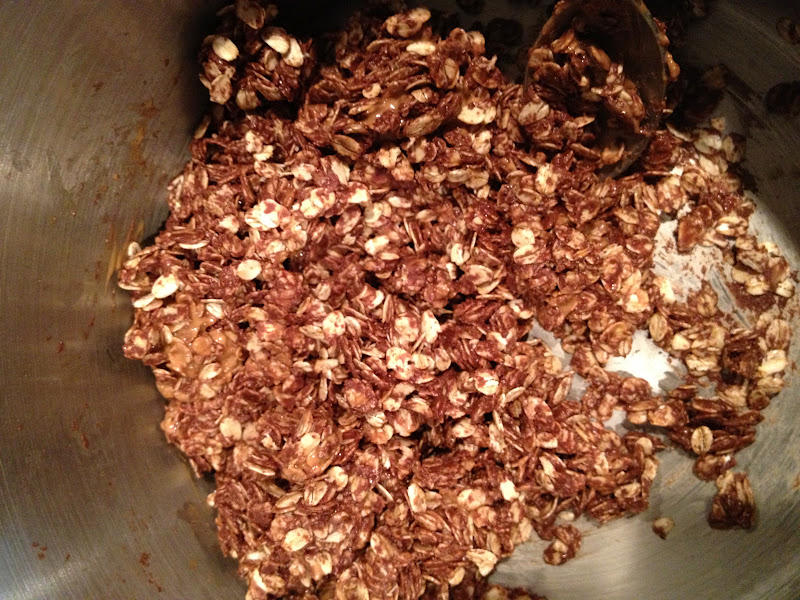
Fold in oatmeal and chopped dark chocolate.  Drizzle with 1 tablespoon coconut oil to help bind the mixture.  


Spread evenly into an 8x8" baking dish and refrigerate to set.  


Cut into 12-16 squares and served once set.  Look how dense and yummy these are!  


I am considering freezing a few pieces to see how that goes, too!  Greg and I love having these in the fridge to satisfy our sweet tooth without a ton of sugar.  Let me know how you like them!

Enjoy!
*M*

Sunday, September 30, 2012

Crockpot Pomegranate Chicken

I love following food bloggers and Facebookers.  One day, I will actually edit my photos and blog every other day like these amazingly creative people do.  Until then, I read through their recipes with awe, loving the food art they bring to life in a digital format for all of us to enjoy.  One favorite FB page of mine is Hot Dishes for Hot Bitches.  (You may find the title offensive, but I think it's empowering...and funny.)  They recently featured a Slow Cooker Pomegranate Chicken recipe from SkinnyMs. on their page that looked especially appetizing, so I decided to give it a go.

Pomegranates have long been known as a super food.  Pomegranate has been studied for its anti-cancer properties and has been shown to destroy breast, lung, and prostate cancer cells in mice.  It may protect cartilage and arteries, lower blood pressure, and bring down cholesterol levels.  Research also suggests that drinking pomegranate juice may protect against dental plaque formation.  I usually use pomegranate seeds in salads, so I was excited to try this pretty simple recipe.  In fact, all I had to buy was chicken and pomegranate juice - everything else was already in my pantry.

Cooking with 100% juice is a great way to impart flavor to a dish while sneaking in key nutrients.  Of course, whole fruit is always best if choosing between fruit and fruit juice, but fruit juice can have its place in the kitchen.  Look for 100% juice with no additives.  If choosing juice made from fruits on the Dirty Dozen list, such as apple or berry juice, opt for organic. 

For another awesome dish using fruit juice, check out my Cider-glazed Chicken with Browned Butter Pecan Rice.  I made it again last week for my husband, and he said it was one of the best things I had ever made.  I aim to please around here!

Y'all know my obsession with crockpots.  This recipe is great if you have the option to come home at work or if you make it on a weekend day, since it only cooks for 4-6 hours.   According to the husband, this was "incredibly tender and flavor rich."  We didn't even need knives to cut it! 

Crockpot Pomegranate Chicken (adapted from this recipe)

Ingredients:

4 chicken breasts, boneless, skinless (1.5 – 2 lbs) - I used organic boneless chicken thighs
1/2 teaspoon black pepper
Kosher or sea salt to taste
1 teaspoon coriander
1 teaspoon chili powder
1/4 teaspoon cayenne pepper
2 teaspoon dried oregano
2 tablespoons extra virgin olive oil
1 tablespoon Whole Grain Mustard with Garlic (Dijon will work if whole grain mustard isn’t available)
2 tablespoons honey
2 garlic cloves, minced
1 1/2 cups pomegranate juice, (no sugar added)

Instructions:


In a small mixing bowl combine all the herbs and spices.


Whisk together in a large mixing bowl half of the herb and spice mix and the extra virgin olive oil.


Rinse chicken, pat dry with a paper towel. Coat chicken with the herb and oil mixture, place in the slow-cooker.  Note: this method of rubbing olive oil on the chicken before adding to the slow-cooker helps to seal in the moisture.


Whisk together in a medium mixing bowl the remaining herb and spice mix, whole grain mustard, honey, minced garlic and pomegranate juice, pour over chicken.


Turn slow-cooker to low and cook 4 hours on high or 6 hours on low.  I had 6 hours to spare before dinner, so I did mine on low.


After chicken is done remove from the slow-cooker, place on a serving platter and drizzle with remaining liquid. This extra moist chicken pairs nicely with a small side of (whole grain) pasta, brown rice, or quinoa, plus plenty of fall veggies.  I sprinkled fresh pomegranates on top for a bit of color/texture and paired with a strawberry and goat cheese salad plus oven-roasted carrots and broccoli.  Yum!


Enjoy!
*M*

Sunday, September 16, 2012

Choosing the Right Energy Bar

As most of y'all know, I'm a big fan of eating whole, real foods as often as we can.  Real food provides a mixture of macronutrients (protein, fat, carbohydrate) and micronutrients (vitamins, minerals, phytochemicals), offers energy, and satisfies our hunger.  Sometimes, however, we need something to grab on the go that will keep us sated until the next meal or will fuel a workout.  Enter energy bars.  

I rely on certain energy bars as snacks or even as parts of meals if I'm pressed for time, and they offer ease and convenience that I often need while running from one job to the next.  Not all energy bars are created equal, however, so I want to offer some recommendations that you can use when shopping for your next favorite snack.  

I usually recommend energy bars as snacks and not entire meals, but if you are using an energy bar to replace a meal I recommend pairing it with additional foods, such as a piece of fruit and some sliced organic cheese.

#1 Check the ingredient list.

Most people check calories or fiber in their bar, but the first place I teach my clients to look is the ingredient list.  It doesn't matter if your bar is a good source of protein if it's also full of artificial ingredients and fake chemicals.  I usually recommend fruit and nut-based bars such as Lara brand because they are made up of very simple, real ingredients: nut, fruit and spices.  (In fact, you could make your own at home with a good food processor.)

Watch out for lots of added sugars (key words: syrup, high fructose corn syrup, sucrose, fructose, honey, etc.), artificial sweeteners (sucralose, acesulfame K, saccharin, aspartame), and partially hydrogenated oils.  Also be wary of soy and vegetable oils, as these are more inflammatory and usually made with genetically modified crop.  (Most soy grown in the US is GMO.)

The first three ingredients listed on a label make up the majority of any food or beverage product.  Thus, if your bar contains a sugar derivative first, it's as if you're eating a candy bar.

Let's take a few of the most popular bars as an example.  Here is the ingredient list for a Luna bar (caramel nut brownie flavor):

LunaPro ® (Cocoa Soy Rice Crisps [Soy Protein Isolate, Organic Rice Flour, Organic Alkalized Cocoa, Alkalized Cocoa], Organic Soy Protein, Organic Flaxmeal), Organic Brown Rice Syrup, Caramel (Organic Dried Cane Syrup, Organic Brown Rice Syrup, Organic Cane Syrup, Cocoa Butter, Water, Soy Protein Concentrate, Natural Flavors, Salt, Organic Soy Lecithin), Coating (Organic Dried Cane Syrup, Organic Cocoa, Palm Kernel Oil, Organic Palm Kernel Oil, Organic Soy Lecithin, Organic Vanilla), Organic Chocolate Chips (Organic Dried Cane Syrup, Organic Unsweetened Chocolate, Organic Cocoa Butter, Soy Lecithin,Natural Flavors), Walnuts, Inulin (Chicory Extract) (Chicory Extract), Vegetable Glycerin, Organic Unsweetened Chocolate, Organic Cocoa, Organic Alkalized Cocoa, Organic Chocolate Flavor, Organic Sunflower Oil, Sea Salt, Natural Flavor.

Notice the large amounts of soy, including soy protein isolate, regular soy protein, soy protein concentrate, and soy lecithin?  Yup, lots of processed soy, only one of which is organic.  That means that other soy derivatives are likely genetically modified (GMOs).  My recommendation?  Skip these bars.

Now, let's look at Clif bar (carrot cake flavor):

Organic Brown Rice Syrup, ClifPro® (Soy Rice Crisps [Soy Protein Isolate, Rice Flour, Rice Starch, Barley Malt Extract], Organic Roasted Soybeans, Organic Soy Flour), Organic Rolled Oats, Organic Cane Syrup, Organic Dried Apples, ClifCrunch® (Apple Fiber, Organic Oat Fiber, Inulin [Chicory Extract], Organic Milled Flaxseed, Psyllium), Soy White Chocolate (Organic Dried Cane Syrup, Cocoa Butter, Soy Flour, Soy Lecithin, Vanilla Extract),Organic Soy Butter (Organic Roasted Soybeans, Organic Soybean Oil, Salt), Dried Carrots, Raisins, Coconut, Sea Salt, Natural Flavors, Spices (Nutmeg, Cinnamon, Cloves).

Again, lots of soy here, and the first ingredient is syrup (sugar). I recommend skipping this one.

Here's my favorite bar, Lara (peanut butter cookie flavor):

Peanuts, dates, salt.

In my opinion, Lara is one of the best products because it's affordable (as cheap as $1 a
bar), made up of simple ingredients, and great tasting. By the way, granola bars are usually not a very satisfying option because they're often high in sugar and very low in protein
.

#2 Consider your protein source.

Protein is an important component of energy bars for many consumers, especially those who weight train.  Protein is imperative for all of us because it helps build muscle mass, maintains blood sugar, and keeps us feeling satisfied.  Unfortunately, the most popular snack bars on store shelves today are filled with protein isolate (read = highly processed) products to boost protein content.  Otherwise, there would be no way to add protein content in a bar form.  Whey and soy protein are the most popular sources, though some also contain rice protein.  Whole food-based bars usually obtain protein from nuts and seeds.  I recommend avoiding soy isolate at all costs because of soy's influence on the thyroid and its potential to act as an endocrine disruptor.  If you are choosing a bar with a protein isolate, opt for rice protein first, then organic whey protein second if possible.  

A last note on protein: while it is important to have protein in an energy bar, the amount you need varies.  If you're opting for a snack replacement, 4-6 grams is sufficient (though more is OK too).  For post-workout or as part of a meal, reach for a bar that has a bit more (8-15 grams).  Bars with 20-35 grams of protein are usually chalky tasting and don't provide too much added benefit if you're getting sufficient protein through regular meals.

#3 Choose something you enjoy, and pay attention while you eat it.

It's not worth eating an energy bar if you have to choke it down.  You won't feel satisfied if you're not actually enjoying your snack.  There are so many great brands that fit the "real ingredient" guideline and also taste great that with some taste testing, hopefully you will find one that you really like.  Try a few different flavors to see what really floats your (bar) boat.

As you eat your bar, try to be mindful.  Take a deep breath in.  Smell what you're eating, and connect to how your body is feeling.  When we involve our senses and our attention, we are much more likely to feel satisfied after eating.  We also digest the food better.

******************************************************

In summary, when looking for a bar, aim for the following:
- Real ingredients
- Non-soy protein
- Good, satisfying taste

Without focusing too much on numbers, here's what I usually recommend to confirm on the label:

150-250 calories (more if using as part of a meal)
4+ grams of protein
3+ grams of fat
3+ grams of fiber

My favorite brands:

Most of these bars can be found at Whole Foods and Sprouts, and some (especially Lara) are stocked by regular grocery stores and Trader Joe's.  

Lara bar - peanut butter cookie and coconut creme pie are my personal favorites, but my husband digs lemon and apple pie.


Zing bar - higher in protein; choose rice protein-based options.  I am a big fan of the cookie dough flavor.


Pure bar - try dark chocolate brownie.  It's organic as well.


Barre bar - haven't tried these, but I'm intrigued!  Made by dancers, 7 g protein.  Order online.


Raw Revolution bar - higher in calories, but also higher in protein and fiber.  All raw ingredients.  Great as a meal replacement when paired with fruit when you're on the run.


If you wanted to be adventurous and make your own bars, here are a few recipes:

Nourishing Protein Bar

Homemade Lara Bars, 4 Ways (Including Nut-free)

Ultimate Energy Bar - made with beans!

Many companies and products are popping up every week, so check your local stores!  What real food bars do you like?

Enjoy!

*M*

Sunday, September 2, 2012

Slow Cooker Pot Roast

Fall is here!  Well, not exactly, but now that it's September we can start burning our pumpkin spice candles and making more cool-weather recipes.  After suffering through a summer (and morning sickness) filled with 100+ degrees heat with sporadic humidity, I welcome the change with open arms. 

I made this delicious pot roast recipe adapted from Crepes of Wrath a few weeks ago and am starting to crave it again!  It is a great option for a Sunday night meal, especially since it cooks throughout the day and quickly fills your house with a delicious, comforting smell.  I recommend that you use your extra time saved by not slaving away in the kitchen by catching up on Breaking Bad.  Or Dexter.  Or True Blood...but that's just my opinion.

I like this recipe because it is made with real, minimally processed ingredients.  It contains canned tomato paste, but unlike a lot of other slow cooker pot roast recipes, it is made of the real deal (read: no onion soup mix here!).

One recommendation: only make this recipe if you can keep the temperature on low for 8-10 hours.  If you cook it too hot, it may make the beef less tender.

I use organic ingredients when it matters - animal-based products, dairy, and produce that is more likely to be pesticide-laden when grown conventionally, such as tomatoes.

Ingredients:

3-4 lb. (organic, grass-fed) boneless chuck roast
32 oz. organic low sodium beef broth or stock
1 6-oz can organic tomato paste
1/4 cup balsamic vinegar
1 T. honey
2 tsp. smoked (or regular) paprika
3 tsp. allspice
2-3 large sprigs rosemary
3 medium sized carrots, coarsely chopped
1 large onion, thinly sliced
1-2 lb. potatoes, diced (~3 medium potatoes)
Salt and pepper to taste

Instructions:


Spray your crock pot with Pam/cooking spray, rub with butter, or line with a crock pot liner.  Pour the beef stock/broth, tomato paste, vinegar and honey into the crock pot.  Stir in the paprika, allspice, salt and pepper. 


Toss in half the vegetables and place your chuck roast on top of everything.


Toss the rest of the vegetables and stir everything together as best you can, ensuring that the beef is mostly submerged in broth.  Top with rosemary.


Set the crock pot on low and cover.  Let cook for 8-10 hours on low.  If you can, check it every so often and give it a stir, although this is not necessary if you are not home.  Look, yummy!


When ready, move the roast to a cutting board and slice to serve.  Serve with vegetables and broth.  I placed it atop brown rice noodles and served with a fresh green salad.


Veggies, whole grains, sustainable meat and lots of flavor - plus, it's easy!

Enjoy!

*M*

Sunday, August 26, 2012

Crockpot Chicken Tikka Masala

I love crockpot cooking.  Prep it, set it, and when you come home it's ready for go-time and makes your house smell like you cooked all day.  I also love Indian food, so this crockpot Indian chicken tikka masala recipe, adapted from Cooking Classy, was something I looked forward to making all week.

This recipe calls for canned tomato sauce.  I'm not a huge fan of canned foods, mainly because most of them have BPA (bisphenol-A) in the lining that can seep into food.  BPA is a known endocrine disruptor that is "linked to male infertility, diabetes, heart disease, aggressive behavior in children," etc. according to Rodale News, so I try to avoid it if possible.  However, sometimes it's inconvenient to make your own tomato sauce or tomato paste, so choosing BPA-free cans is a better option.  

Two brands that I regularly buy because they make BPA-free cans are Muir Glen and Eden Organics.  You can find them at Whole Foods, Sprouts, and potentially stores.

This recipe contains a decent amount of cream.  I bought organic pasture cream, which is made from milk from grass-fed cows, but that doesn't take away the heaviness of it.  You can use less cream than indicated or try adding more yogurt at the end, which is what I did.  However, since my husband isn't a huge yogurt fan, he didn't like the tanginess it added.  If I made this again, I would just use a little less cream than indicated (1/2-3/4 cup).

Ingredients:
5 boneless, skinless organic chicken breast halves or chicken thighs, cut into 1 inch pieces (about 3 lbs)

1/2 large yellow onion, finely diced

4 cloves garlic, minced

2 Tbsp freshly, finely grated ginger

1 jalapeno, stemmed, sliced in 
half and seeds removed - I omitted but used extra cayenne
1 (29 oz) can tomato puree (BPA-free brand)

1 1/2 cups plain yogurt 

2 Tbsp extra virgin olive oil

2 Tbsp lemon juice

2 Tbsp Garam Masala

1 Tbsp cumin

1/2 Tbsp paprika

2 tsp salt, or to taste

3/4 tsp cinnamon

3/4 tsp freshly ground black pepper

1-3 tsp cayenne pepper - tailor to your spicy preference

2 bay leaves

1 cup organic heavy cream

1/2 tbsp organic cornstarch

Prepared long grain brown rice or Basmati rice

Chopped cilantro, for serving
1 bag of organic frozen peas, optional

Directions:

Assemble ingredients:


In a large mixing bowl combine chopped onions, minced garlic, grated ginger, sliced jalapeno, tomato puree, plain yogurt, olive oil, lemon juice, Garam Masala, cumin, paprika, salt, cinnamon, pepper and cayenne pepper.  Stir until combine.  


Pour half of sauce mixture into a large slow cooker then add in diced chicken followed then cover chicken with remaining sauce.  Add in 2 bay leaves.  Cover slow cooker with lid and cook on low heat for 8 hours (or high for 4 hours).  


I added a bag of organic frozen peas about an hour before serving so they would heat through.  Bonus veggies - and color.

In a mixing bowl, whisk together heavy cream and cornstarch, pour mixture into slow cooker and gently stir.  Allow mixture to cook 20 minutes while you prepare the rice. 


Remove bay leaves and sliced jalapeno and serve warm over rice and sprinkle with chopped cilantro.


I forgot to get cilantro so sprinkled with peanuts for some visual interest.
 

This dish is saucy and creamy, so it's best to serve with a crunchy, fresh salad.


YUM!  This was even better the next day when reheated over the stove.

Enjoy!

*M*